WHERE
Cool, dry, steady
Icon suggests 16–19 °C and 45–60% humidity. Keep books away from radiators, damp outside walls and direct daylight, which does damage that cannot be undone.
Check a spot mydoodlebooks
WHAT CONSERVATORS ADVISE
A book is a small machine made mostly of plant fibre.
COOL, DRY and steady
16–19 °C Recommended room temperature for books
Paper, boards and thread react to light, warmth and moisture, and the binding wears with every pull from the shelf. Conservators in the UK and at the Library of Congress agree that the cheapest care is also the best: good storage and careful handling.
THE SHORT ANSWER
Prevention beats repair for books.
Three things conservators repeat.
WHERE
Icon suggests 16–19 °C and 45–60% humidity. Keep books away from radiators, damp outside walls and direct daylight, which does damage that cannot be undone.
Check a spotHANDLING
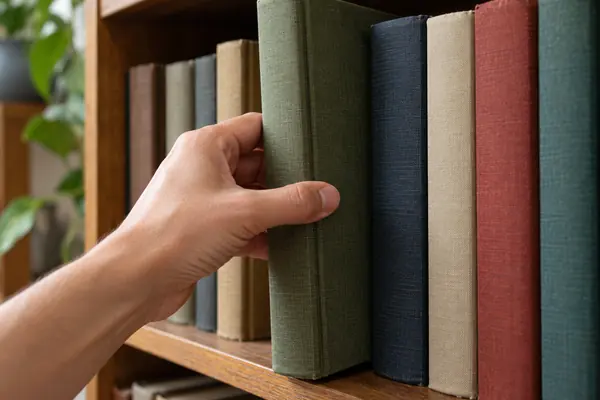
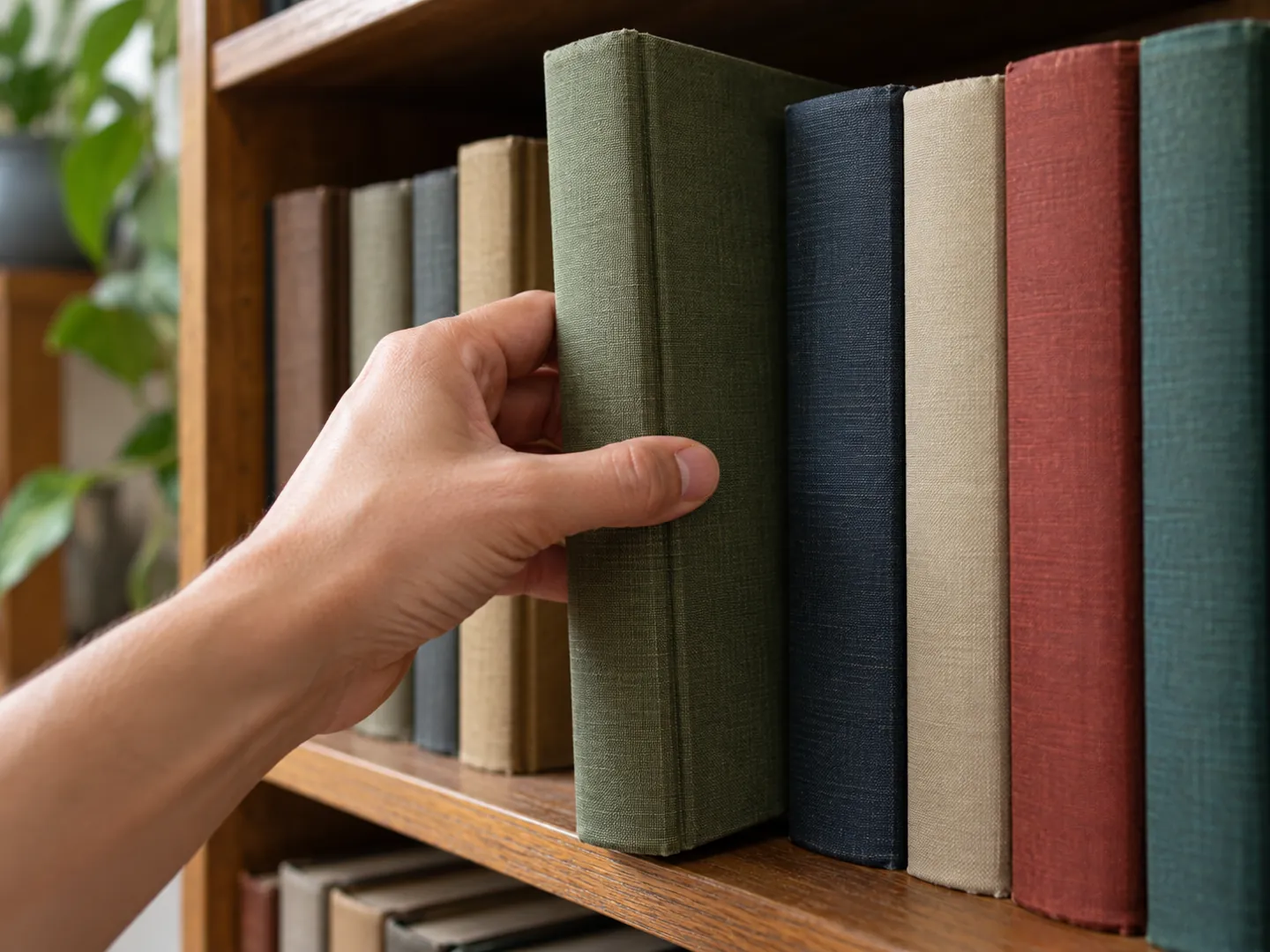
Pulling a book out by the top of the spine damages it. Push the neighbours back and grip both sides of the spine in the middle instead.
Four habitsSTORAGE
Attics, garages and basements bring swinging temperatures, damp, pests and leaks. Plastic bags do not protect books from those conditions.
Packing books awayA QUICK SPOT CHECK
Pick a place to see what conservation guidance says about it. The bar shows how much risk that spot carries for books.
Based on guidance from Icon, the Institute of Conservation, and the Library of Congress Preservation Directorate.
FOUR HABITS TO TRY
None of these needs special kit. They come straight from conservators' advice on handling and shelving books.
Clean, dry hands without lotion are safest for turning pages. Gloves reduce your feel for delicate paper and can snag on tears.
Put books of similar size together so their covers support each other, and use bookends so nothing leans. Lay very large books flat.
Some old books do not open much beyond 90°. Prop the covers rather than pressing a book flat, and never leave one face down.
Ordinary adhesive tape stains paper and cannot be removed without damage. Tie a broken book with linen tape and ask a conservator.
TWO NUMBERS WORTH KNOWING
The temperature UK conservators suggest,
and the humidity where mould takes hold.
16–19 °C
Recommended room temperature for books
Icon recommends 16–19 °C with 45–60% relative humidity. The Library of Congress gives a similar picture: 70 °F (about 21 °C) or below and 30–55% humidity suit most books.
TEMPERATURE · ICON
60% rH
Above this, mould and insects can flourish
If ideal conditions are hard to reach at home, Icon suggests aiming for a stable relative humidity below 60%. The Library of Congress adds that below about 30% books can warp as they contract.
HUMIDITY · ICON
Both bodies stress stability: rapid swings in temperature or humidity stress a book's structure and can split the joints where the covers meet the spine.
PACKING BOOKS AWAY
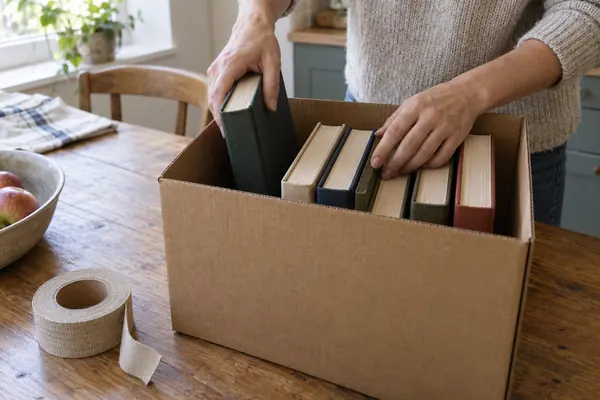
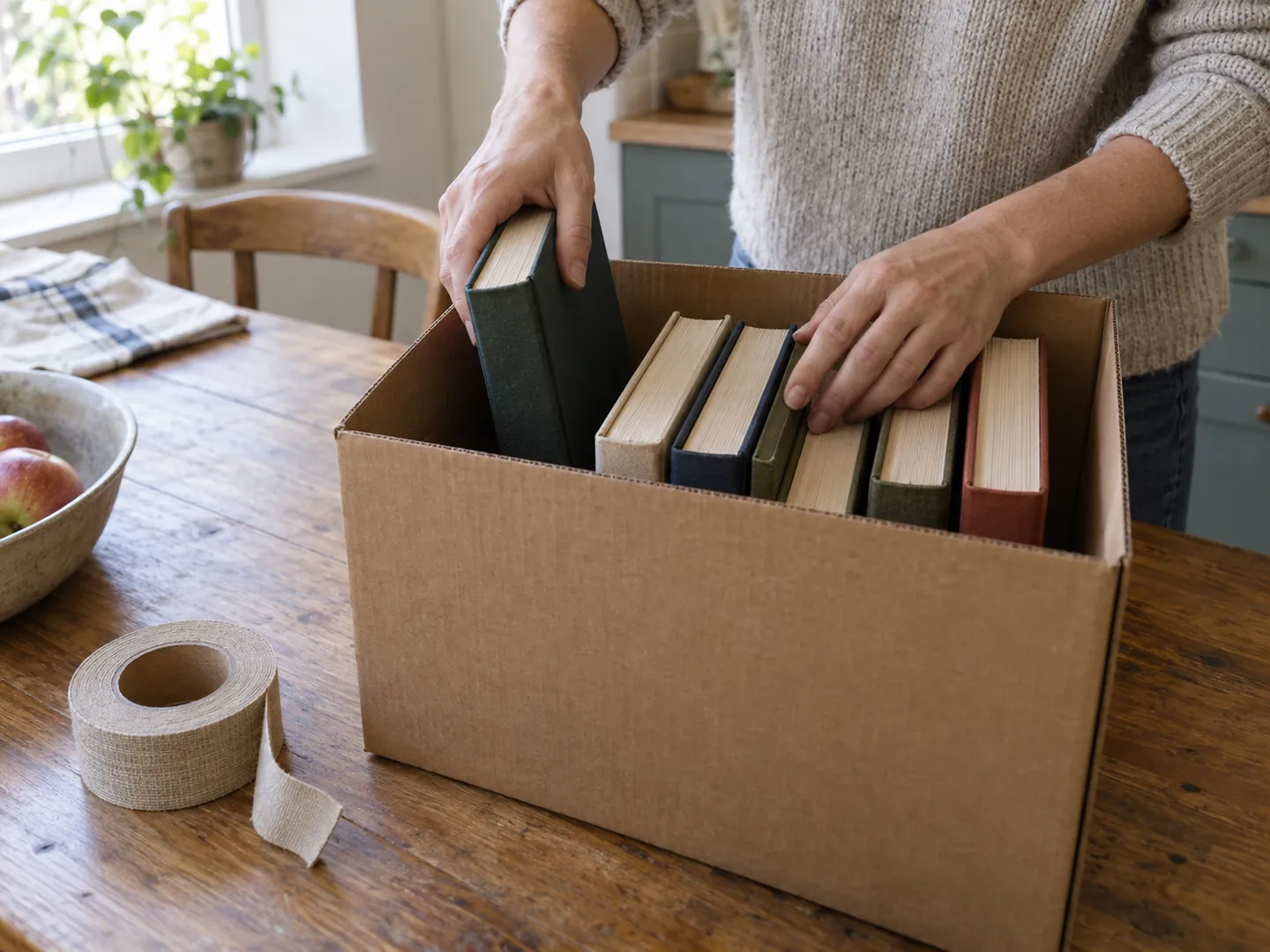
If books must go into storage, pack them clean and dry in sturdy boxes, ideally acid-free for valuable ones. Avoid bin liners, plastic bags and cling film, which give off harmful gases as they degrade.
Pack small books upright or flat, large books flat, and never with the front edge facing down. Do not overfill or crush boxes, raise them off the floor, and check them at least once a year.
Questions
Usually not for turning pages. Both the Library of Congress and Icon say freshly washed, dry hands are safest, because gloves reduce sensitivity and can catch on delicate paper. Gloves are sometimes suggested for textile or metal-clasped bindings.
No. The Library of Congress says not to oil or dress leather books, and Icon says dressings can make a book sticky, attract dirt and stain. Controlling the environment is the best way to stop leather drying out.
Unsealed wood can release acids that harm paper. The Library of Congress suggests metal shelving for new purchases, or lining existing wooden shelves with a barrier such as polyester film or acid-free board.
If there is no active mould, the Library of Congress says odours fade when books are kept with air circulating in a cool room at 35–55% humidity. A closed container with activated charcoal or baking soda, not touching the book, can also help.
The Library of Congress advises air drying them straight away and controlling the room's temperature and humidity. If they cannot be air dried within two days, they can be frozen until they can be dried.
Updated
ABOUT THIS NAME
mydoodlebooks.com is part of the DoodleSale portfolio. It isn't in an auction right now, but you can ask about leasing it.